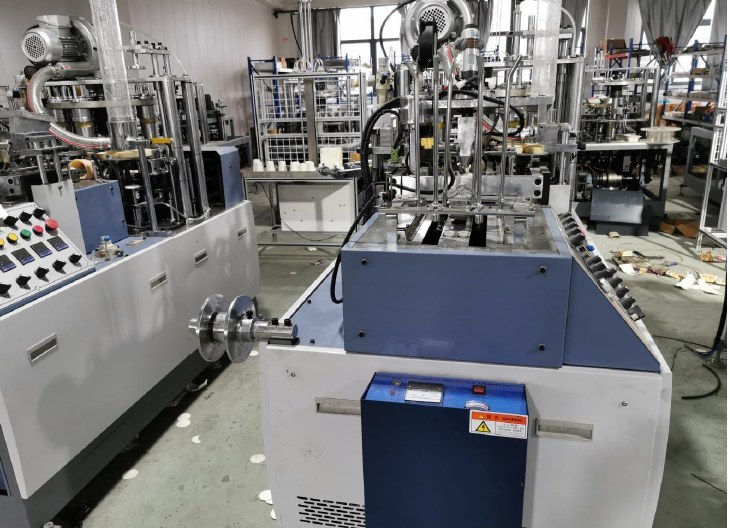
Coffee cup machine configuration begins with the finished cup your customer will use. Beverage application, cup geometry, lid and wall construction influence the material and process scope. A nominal ounce description alone does not define the equipment purchase.
Give the supplier an identified sample or drawing, and state which requirements are confirmed. Keep product requirements separate from assumptions about machine capability. The configuration discussion should connect the inner cup, any outer-wall process and final packing.
Describe geometry and the intended use
Provide top and bottom diameters, height, rim information and the relevant volume definition. Identify the lid reference when fit is required. Include the intended filling and handling conditions needed for the buyer's product evaluation.
Do not infer performance from the word “coffee” alone. The mould and size guide helps connect the drawing, tooling and lid evaluation. Resolve disagreements between the sample and drawing before approving the application.
Define the wall and coating independently
State whether the finished cup has a single wall or an additional outer wall/sleeve. Describe the inner-cup paper and coating separately from the outer material. Coating on both sides of one board does not make it a double-wall cup.
Use the single-wall versus double-wall guide to define the production route. Ask the supplier to identify whether the outer-wall stage is included, optional or outside the proposed equipment scope.
| Application field | Information to send | Configuration question |
|---|---|---|
| Cup geometry | Drawing revision and identified sample | Which tooling and change parts apply? |
| Lid/rim | Lid reference and fit requirement | How will fit be evaluated? |
| Inner material | Paper grade, coating and lot details | What trial evidence is available? |
| Outer structure | Sleeve/wall drawing and material | Is another process required? |
| Output | Accepted quantity and order mix | What capacity boundary is needed? |
| Packing | Stack, bag and released-pack requirement | Which handling interfaces are included? |
Qualify material through the actual route
Identify the sidewall fans and bottom material used in the trial. Ask the supplier to confirm the application on the intended stock, using its approved procedure. Equal GSM or a familiar coating name does not prove equivalent feeding and sealing behavior.
Keep material/product documentation distinct from machine trial evidence. A forming demonstration does not establish food-contact suitability for every intended use or destination. Use the paper-requirements guide to prepare the relevant material information.
Evaluate the finished cup and lid together
Agree dimensions, seam/bottom integrity, rim and relevant handling checks. Where lid performance matters, identify the lid and evaluation method. Avoid a universal fit tolerance, application force or insulation promise without an approved specification and test.
If an outer wall is included, inspect its position, appearance and attachment under the agreed requirements. Record whether the complete cup was demonstrated, rather than treating separate inner-cup and sleeve samples as proof of a combined application.
Connect forming to collection and packing
Review how the finished construction stacks, transfers and enters the pack format. Extra wall thickness or a different geometry may change handling, so qualify the actual product rather than assuming a previously tested single-wall cup represents it.
For an initial configuration discussion, review the HN-S120 paper cup making machine and ask for confirmation against the application brief. Treat public product information as a starting point, not a finalized drawing or performance guarantee.
Keep future products visible but separate
List the first cups you plan to produce and any later sizes or constructions. Identify required tooling now and the review needed for expansion. A broad catalogue range should not silently become approval of every future customer cup.
Retain the approved sample, drawing, material references and test report together. When a lid, paper or cup revision changes, reassess the affected requirements before using the old setup as the new production reference.
Frequently asked questions
Is ounce size enough to select a coffee-cup machine?
No. Geometry, material, wall construction, lid requirements and output scope need definition.
Is double PE the same as double wall?
No. They describe coating and physical wall construction respectively; specify both independently.
Can insulation performance be inferred from wall count?
No. Evaluate the complete design under defined use conditions when performance is a customer requirement.
Does forming approval include packing approval?
Only when the complete route and pack requirements are included in the documented trial.
Prepare a coffee-cup brief
Send cup drawings/samples, lid references, material and construction details through the HANNAI inquiry page. State the initial product mix and completed-output target separately from later expansion.