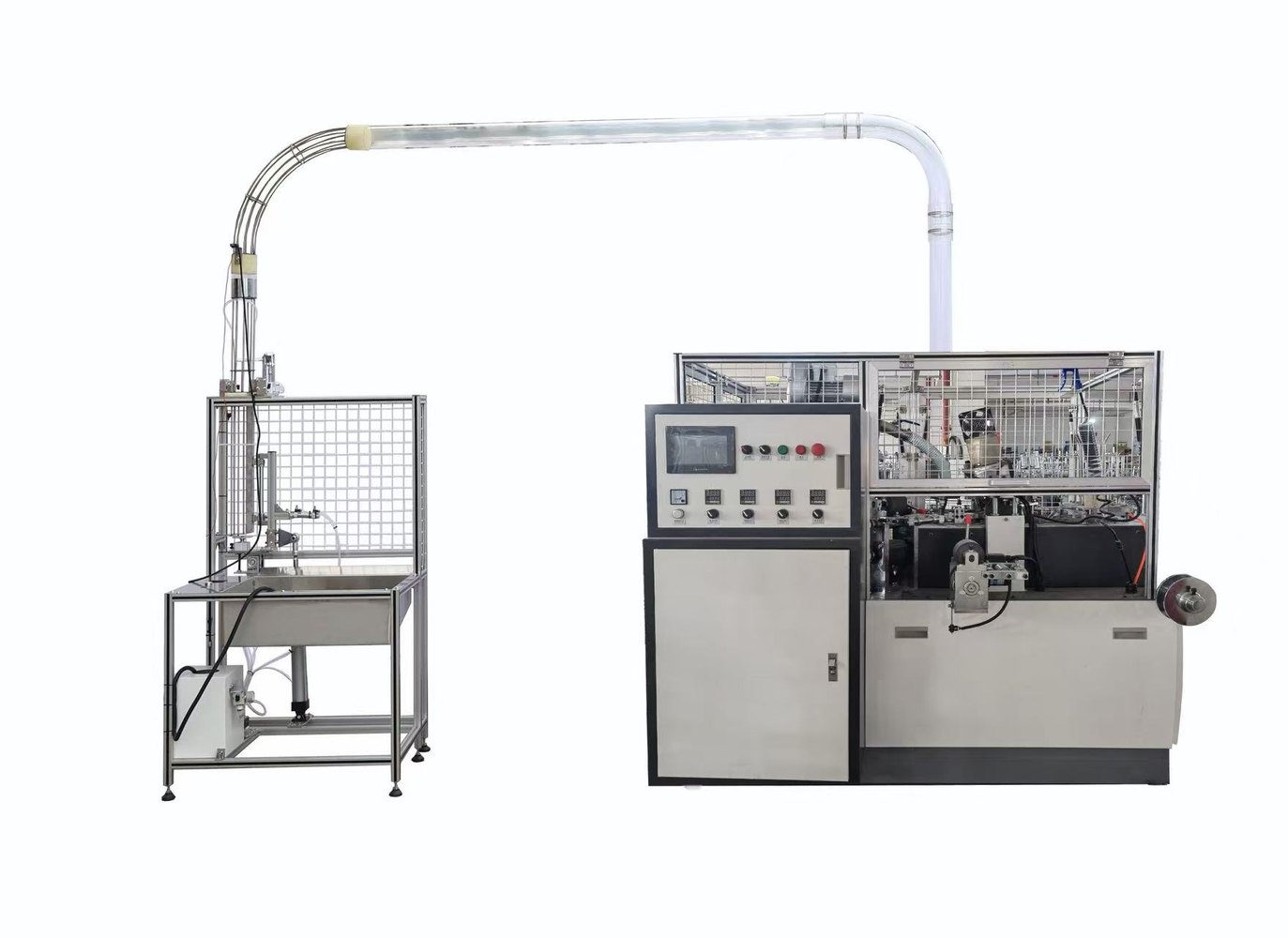
Paper cup machine production ramp up should turn an installed application into repeatable accepted production. Increasing a speed setting or adding more shifts is not proof that the whole process is ready for larger commitments. Material, people, inspection and packing must support the same expansion.
Begin with a defined baseline and use evidence gates to expand scope. There is no universal number of days to reach stable output. Record the actual application, operating conditions and unresolved issues instead of presenting an optimistic schedule as a demonstrated result.
Establish the installed baseline
Identify machine configuration, tooling, cup drawing, material lots and the approved operating references. Confirm relevant installation and acceptance records before planning normal output. Retain the roles authorized to operate, adjust, inspect and release production.
The site acceptance guide supplies that handover boundary. A successful first cup is useful progress but does not replace the required installed trial.
Choose one initial production scope
Start with an approved cup/material combination and a defined operating window. Record what the trial is intended to establish: accepted output, quality consistency, handling or operator readiness. Identify assumptions that remain outside the demonstration.
Use the sample approval checklist for product references. Introducing several unqualified cups at once can make the origin of losses difficult to separate.
| Expansion gate | Evidence to review | Decision before expanding |
|---|---|---|
| Installed readiness | Site/utility and acceptance records | Baseline conditions approved |
| Initial application | Identified material, tooling and sample | Product requirements demonstrated |
| Repeatable run | Time, accepted counts and quality findings | Result persists under defined conditions |
| Task coverage | Operator, inspection and handling observations | Essential duties reliably covered |
| Added scope | New size/shift/material evaluation | Changed conditions qualified |
| Normal commitment | Released-pack output and open actions | Delivery plan matches evidence |
Collect results with consistent definitions
Record operating time, interruptions, formed cups, accepted cups and released packs where relevant. Keep the same inspection and count definitions across trials. A reported improvement can be misleading if a later interval excludes losses included in the baseline.
Use the production-capacity guide to maintain the time and output boundary. Mark held stock separately until the authorized disposition is complete.
Resolve important losses before increasing commitments
Classify recurring stops and defects using their observed symptoms and conditions. Investigate material, setup, handling and task coverage with relevant evidence. Follow supplier-approved interventions and retain their sequence.
The waste-reduction guide helps separate startup loss from running and downstream loss. Do not count weakened inspection or accepting earlier rejects as a valid ramp-up improvement.
Expand one meaningful dimension at a time
When practical, separate changes such as a new cup size, another material supply, higher operating rate or an additional shift. Identify the evidence needed for each. If several conditions change together, record that the result cannot isolate a single effect.
Check changed tooling, procedures and personnel readiness before release. Use the operator training guide for demonstrated tasks. Stable production under one team does not automatically establish another shift's readiness.
Qualify the downstream result
Observe collection, inspection, counting and packing on the same production basis. A forming increase can create held stock or handling losses if the next process cannot sustain it. Record completed-pack output where delivery capacity is the goal.
Review buffers and scheduling alongside the packing-machine buying guide. Do not treat an accumulating work-in-process quantity as evidence that the completed line has reached its target.
Retain a clear release and follow-up record
Record what is approved for normal production, which conditions remain limited and who closes unresolved items. Keep the baseline, interventions and later results together. When results differ, compare the conditions before changing all planning assumptions.
Discuss expansion with the HANNAI equipment team using identified application and performance evidence. Delivery commitments should match demonstrated accepted output and the actual release process.
Frequently asked questions
Is increasing speed enough to complete ramp-up?
No. Quality, available time, task coverage and downstream released output need evaluation together.
Can one successful shift approve every operating condition?
Record the demonstrated scope and qualify meaningful changes before expanding its approval.
Should several variables be changed during an improvement trial?
Use an authorized plan and retain the changes. Multiple simultaneous changes can limit causal conclusions.
When can larger customer commitments be made?
When the relevant accepted and released-output boundary is supported by repeatable evidence and unresolved limitations are understood.
Prepare a ramp-up review
Send the installed application, run records, quality findings and proposed expansion through the HANNAI inquiry page. Separate achieved results from the next target.